Behavioral Economics
1979–todayReal people aren't calculators - economics should study humans, not econs.
The big idea
Standard economics models people as tireless calculators who weigh every option and never flinch. Behavioral economics studies the people who actually exist: the ones who pay for gym memberships they don't use, feel a $50 loss twice as hard as a $50 win, and choose whatever option is pre-ticked. The claim isn't that people are stupid - it's that our mistakes are systematic, and therefore predictable, and therefore something policy can plan around.
When and why it rose
By the 1970s, the rational-agent model had conquered economics - elegant, mathematical, and increasingly detached from observable humans. Two Israeli psychologists, Daniel Kahneman and Amos Tversky, started running experiments and cataloguing the deviations. Their prospect theory (1979) showed that people don't weigh gains and losses the way the models said: losses loom about twice as large as gains, and how a choice is framed - "90% survival rate" versus "10% mortality" - flips decisions even when the numbers are identical.
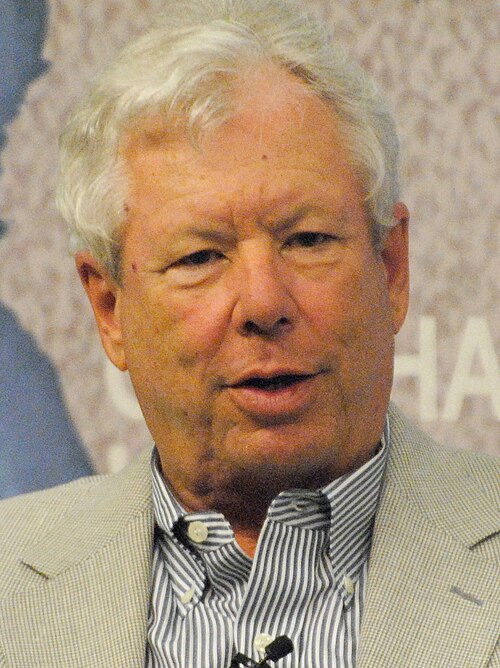
Economist Richard Thaler translated the psychology into economics proper, documenting anomalies the standard theory couldn't digest: we treat money differently depending on which mental jar it sits in, and we sincerely plan to save more starting next year, every year. Herbert Simon had coined the umbrella term decades earlier - bounded rationality - but it took the experimental evidence, plus Nobel prizes for Kahneman (2002) and Thaler (2017), to move it from heresy to curriculum.
What it got right
The experiments replicate - loss aversion, framing effects, default effects, and present bias are about as solid as findings get in social science (with some skirmishes; see below). And the applications visibly work. When countries make organ donation opt-out rather than opt-in, registration rates jump. When employers auto-enroll workers into pension plans - the UK has done it nationally since 2012 - participation soars among the very people who always meant to sign up. Thaler and Cass Sunstein's Nudge (2008) named the playbook: keep everyone's freedom to choose, but set the defaults for humans rather than calculators. Behavioral economics also gave finance a language for bubbles and panics - Robert Shiller's "irrational exuberance" - that pure rationality struggled to supply.
Where it fell short
Critics come from two directions. From one side, economists like Gary Becker's heirs argue that markets discipline bias - fools and their money are soon parted, and the survivors look rational - so lab quirks may not scale to market outcomes (contested, with evidence both ways). Gerd Gigerenzer argues many "biases" are actually smart shortcuts that work well in the real world and only look like errors in artificial lab puzzles. From the other side, the replication crisis of the 2010s hit some celebrated findings hard - "ego depletion" and much of the priming literature crumbled, and in 2023 high-profile fraud cases toppled prominent honesty research (the core Kahneman-Tversky results, note, have held up). Finally, a fair-sized deflation: a 2022 meta-analysis found that once publication bias is accounted for, the average nudge is far weaker than headlines promised. Nudges are seasoning, not the meal.
Its fingerprints today
Governments now run "nudge units" - starting with the UK's Behavioural Insights Team in 2010, copied on every continent. Auto-enrollment retirement saving is law in several countries. Every app's default settings, every "9 out of 10 customers renew" letter, every one-click checkout is choice architecture, for better or worse. And the deepest fingerprint is on economics itself: the rational-agent model is now treated as a useful baseline rather than a portrait - which is roughly where a smart 15-year-old would have told you to put it.