It is not from the benevolence of the butcher, the brewer, or the baker, that we expect our dinner, but from their regard to their own interest.
Adam Smith, The Wealth of Nations (1776)
Economics, one big idea at a time.
From the mercantilists to the behavioral economists, this is the story of how we learned to think about money, markets, and trade. It's told through the people who fought it out: what they claimed, why it mattered, and where it falls apart. All in plain English, with plenty to play with along the way.
Don't read it - feel it
Wherever an idea can be a toy instead of a paragraph, it is.
Interactive
Supply & Demand
Nobody set the price - it found itself.
Drag prices, trigger shocks, and impose ceilings and floors on a toy coffee market. Five short acts from 'what is demand?' to 'why do price controls cause shortages?'
Interactive
Price Signals & the Calculation Problem
Run the economy yourself - first as a market, then as a planner.
A toy economy of six linked goods. Watch prices carry news of a drought in market mode, then freeze prices and try to plan your way through the same shock by hand.
Start with the giants
Six thinkers who set the terms of the argument everyone else is still having.
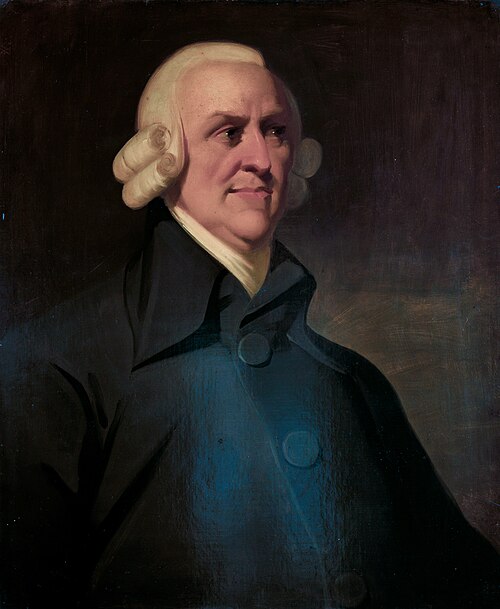
Adam Smith★
1723–1790 · Scottish
The invisible hand - self-interested trade, steered by prices, can organize a society better than any planner.
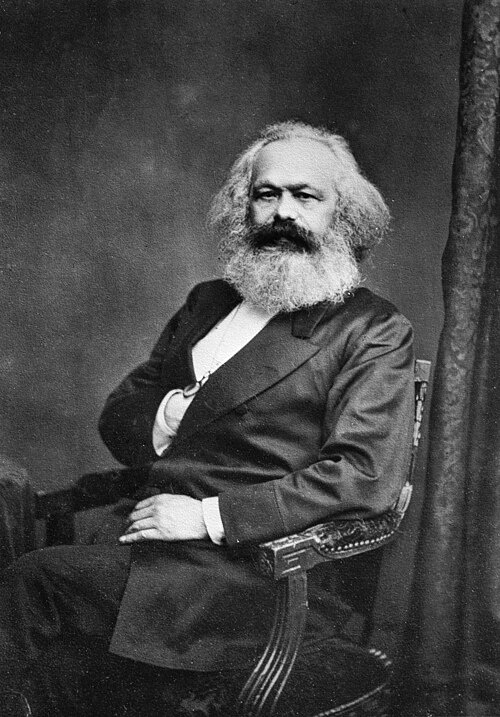
Karl Marx★
1818–1883 · German
Profit, he argued, is unpaid labor - capitalism runs on extracting surplus value from workers, and its own contradictions would bring it down.
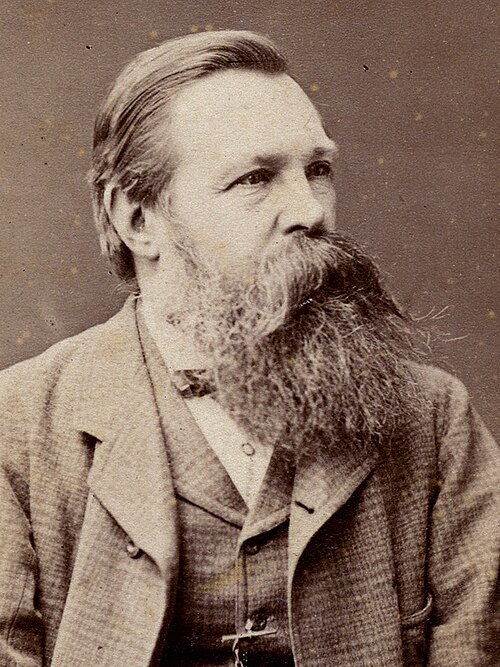
Friedrich Engels★
1820–1895 · German
Co-author of the Communist Manifesto, first great reporter of industrial poverty, and the man who turned Marx's ideas into Marxism
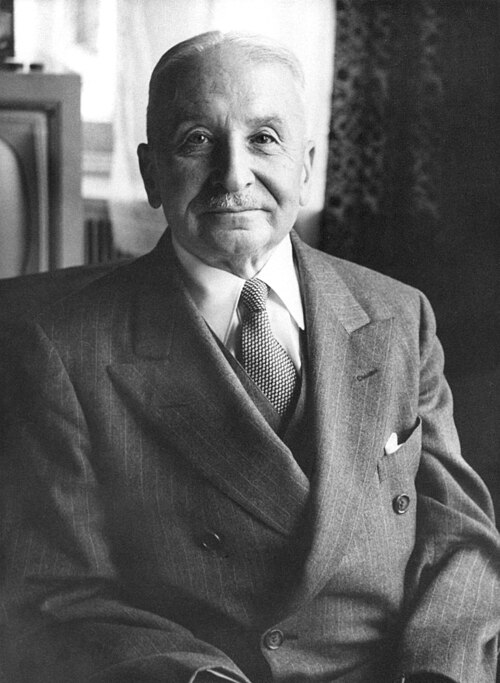
Ludwig von Mises★
1881–1973 · Austrian-American
The economic calculation problem - why central planners can't do the math without market prices
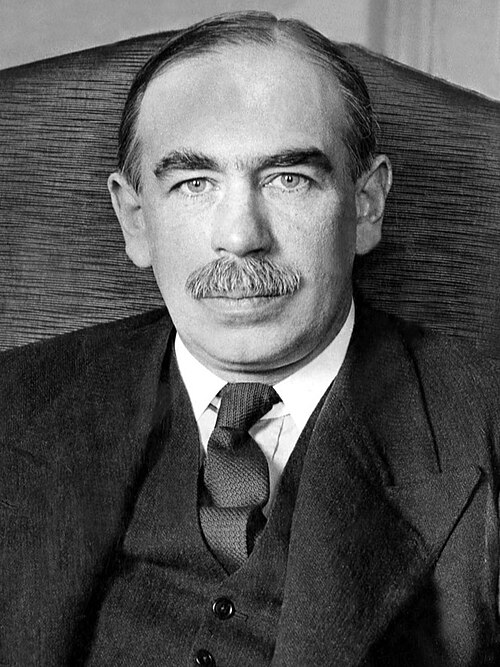
John Maynard Keynes★
1883–1946 · British
Argued that economies can get stuck in slumps - and that government spending can pull them out
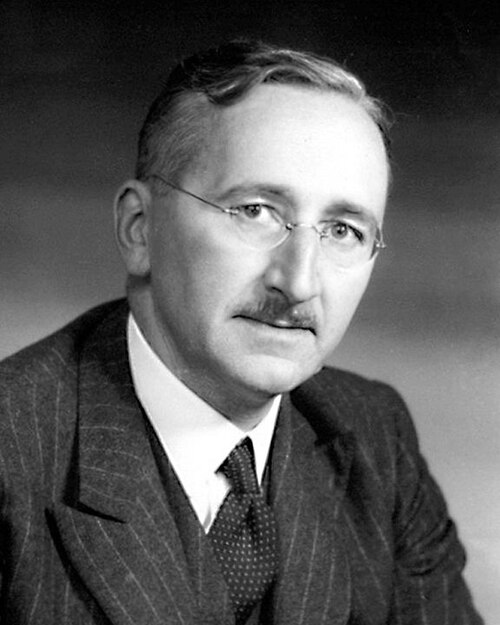
Friedrich Hayek★
1899–1992 · Austrian-British
The knowledge problem - prices carry information that no central planner can gather
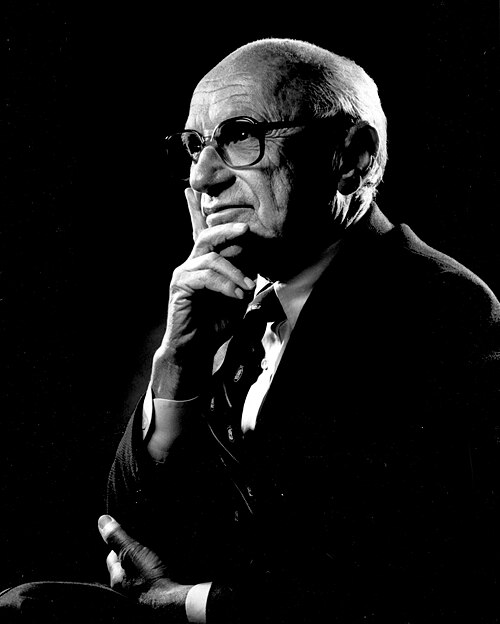
Milton Friedman★
1912–2006 · American
Monetarism - "inflation is always and everywhere a monetary phenomenon"
Or follow the conversation through time
Ideas answer each other across centuries. Pick up the thread anywhere.
- Precursors & mercantilism 1550–1750Before economics was a discipline: merchants and officials arguing that a nation grows rich by selling more than it buys.
- Physiocrats & classical dawn 1750–1800French physicians and Scottish philosophers start treating the economy as a system with laws of its own.
- Classical economics 1800–1870The first full theories of growth, trade, rent, and population - built in the shadow of the Industrial Revolution.
- Marx & the socialists 1840–1895The classical toolkit turned against capitalism itself: exploitation, crisis, and the case for a different system.
- Marginal revolution & neoclassical 1870–1920Value moves from labor to the margin: economics becomes about choices, trade-offs, and equilibrium.
- The Keynesian era & its rivals 1920–1970Depression and war put governments at the center of the economy - and spark the century's great debate about planning.
- Monetarism & new classical 1950–1990The counter-revolution: money matters, incentives matter, and governments fail too.
- Behavioral & modern 1970–todayEconomics meets psychology, field experiments, and big data - and rediscovers that humans are human.