Keynesian Economics
1936–todayEconomies can get stuck - and when they do, government spending is the jump-start.
The big idea
An economy can fail the way a stalled car fails: nothing is broken, it just isn't turning over. When people get scared, they stop spending; when spending stops, businesses fire workers; fired workers spend even less. Everyone acting sensibly makes everyone poorer. John Maynard Keynes's claim was that markets don't reliably fix this on their own - an economy can idle below its potential for years - and that government should supply the missing spending: cut taxes, build things, get money moving until the engine catches.
When and why it rose
The Great Depression made the old answers unbearable. By 1933, a quarter of American workers had no job. The classical view said wages and prices would adjust and full employment would return; the advice was patience and balanced budgets. Patience was tried. It failed for a decade.
Keynes's General Theory (1936) explained why. Total spending - aggregate demand - can get stuck too low, and waiting doesn't fix it, because the long run is a "misleading guide to current affairs. In the long run we are all dead." His remedy scandalized the orthodox: in a slump, governments should run deficits on purpose. Each dollar spent becomes someone's income and gets partly re-spent - the multiplier. World War II ran the experiment at scale: massive public spending, and the Depression vanished. After the war, Keynesianism became the West's operating manual, written into the very invention of GDP accounting and the Bretton Woods system Keynes helped design.
What it got right
The central insight - that recessions are often demand failures, and policy can shorten them - is now shared far beyond people who call themselves Keynesians. The framework explains why thrift can backfire in a slump (the "paradox of thrift": your canceled dinner out is a waiter's canceled income). It gave governments a dashboard: fiscal policy and monetary policy as levers, unemployment and inflation as gauges. And the two great crises of our era read as vindications: in 2008 and 2020, governments everywhere - including conservative ones - reached for stimulus, and the slumps, though awful, were far shorter than the 1930s.
Where it fell short
The 1970s were the reckoning. Keynesian models implied a stable trade-off between inflation and unemployment; then stagflation delivered both at once. Milton Friedman and Edmund Phelps had predicted exactly that - people adjust their expectations, so stimulus keeps buying less and less employment at the cost of more and more inflation. Friedman's monetarists, and later Robert Lucas's rational expectations school, argued the whole apparatus ignored how people anticipate policy. There's also a political critique, pressed by James Buchanan: Keynes prescribed deficits in bad times and surpluses in good times, but politicians only ever order the first half of the prescription. Whether the stimulus of 2021 caused the inflation of 2022 is the newest round of this old fight - genuinely contested.
Its fingerprints today
Every "stimulus package," every headline about GDP growth, every central bank statement about supporting demand is Keynes's vocabulary. Automatic stabilizers - unemployment insurance, progressive taxes that lighten in a slump - are Keynesianism running quietly in the background of every rich country. The IMF and World Bank trace to his pen. And whenever a crisis hits, leaders of every party rediscover him on cue. "We are all Keynesians now," the line usually credited to Friedman (he said something more qualified - fittingly, that's contested too), keeps coming true on schedule.
Key figures
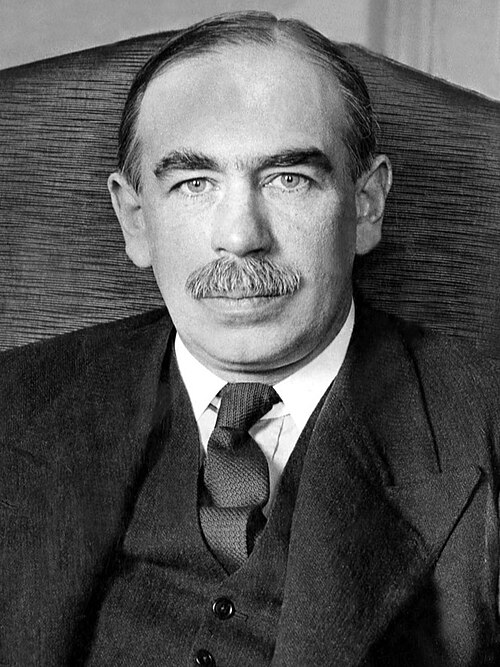
John Maynard Keynes★
1883–1946 · British
Argued that economies can get stuck in slumps - and that government spending can pull them out

Joan Robinson
1903–1983 · British
Imperfect competition and monopsony - economics for markets where somebody has the upper hand.
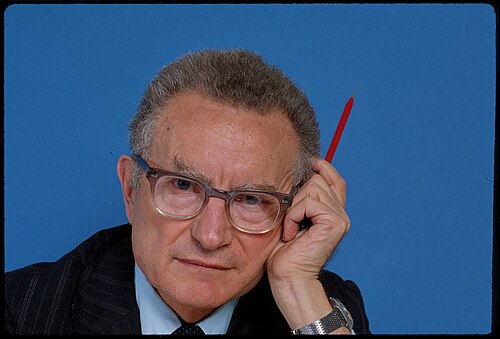
Paul Samuelson
1915–2009 · American
Rewrote economics in equations - then taught it to the world in the best-selling textbook of all time.