Physiocracy
1750–1790All wealth grows from the land - so get out of the farmer's way.
The big idea
The physiocrats - a small circle of French thinkers in the 1750s and 60s, led by the royal physician François Quesnay - argued that all real wealth comes from the land. Farming creates a genuine surplus: you plant one sack of grain and harvest five. Everything else, in their view, just reshuffles what the soil produced. Their policy advice followed: stop strangling agriculture with taxes and regulations, and let the economy follow its natural order. They even coined the phrase for it: laissez-faire.
When and why it rose
Picture France under Louis XV: a rich country that somehow felt broke. The crown was drowning in war debt. Taxes fell crushingly on peasants while nobles and clergy paid little. Internal customs barriers meant grain could rot in one province while another starved, because moving it across France cost more than shipping it abroad. Meanwhile, mercantilist policy showered privileges on manufacturers and treated agriculture - the actual bulk of the economy - as a cow to be milked.
The physiocrats were the backlash. They called themselves les économistes (the first people to claim the name), and they proposed something radical: the economy was a natural system with its own laws, like the circulation of blood - an analogy that came easily to Quesnay, a doctor. His Tableau Économique (1758) traced how money flows between farmers, landlords, and artisans, arguably the first model of an economy as a connected whole.
What it got right
Three big things. First, the Tableau was a genuine breakthrough: the idea that you can map an entire economy's flows on one page is the ancestor of GDP accounting and every circular-flow diagram in every textbook since. Second, the physiocrats' instinct that wealth is what you produce, not the gold you hoard, was a direct hit on mercantilism - and Adam Smith, who spent time with the group in Paris, took the point and ran with it. Third, their tax analysis was shrewd: since (they argued) all surplus ultimately comes from land, taxes on anything else just get passed along until landowners pay anyway - so tax land directly and skip the paperwork. That logic resurfaced a century later in Henry George's land-value tax movement, which still has fans among economists today.
Where it fell short
The foundation was cracked: agriculture is not the only source of surplus. A workshop turning wool into coats adds real value too, and the physiocrats' label for manufacturing - the "sterile class" - was a wrong turn Smith politely corrected. Industrialization then made the error impossible to miss. Critics also note the awkward politics: a theory proving that landowners should be left alone was rather convenient for the aristocrats who funded the movement (how much that motivated the theory is contested). And their one policy experiment ended badly - when Turgot, their ally in government, freed the grain trade in 1774, bad harvests plus panic produced riots, and reform collapsed.
Its fingerprints today
Every circular-flow diagram and national income account carries the Tableau's DNA. "Laissez-faire" remains the two most famous words in economic policy. Land-value taxes - beloved by economists, rarely enacted - are physiocracy's most direct living descendant. And whenever someone insists the "real economy" is farms and factories rather than finance, they're humming Quesnay's tune, whether they know it or not.
Key figures
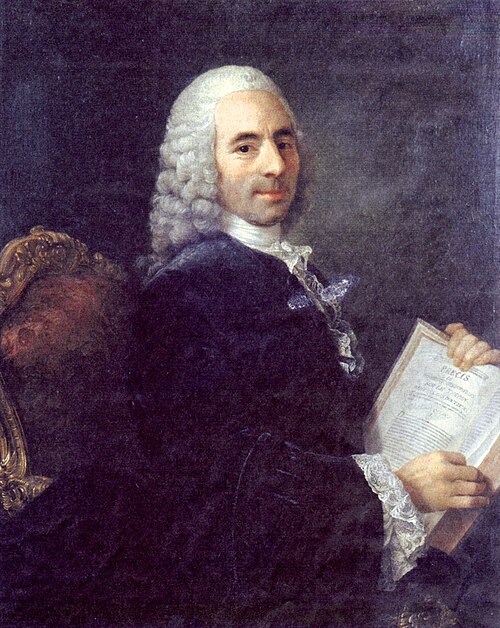
François Quesnay
1694–1774 · French
The Tableau Économique - the first picture of an economy as a circular flow - and the conviction that the whole machine runs best when left alone.
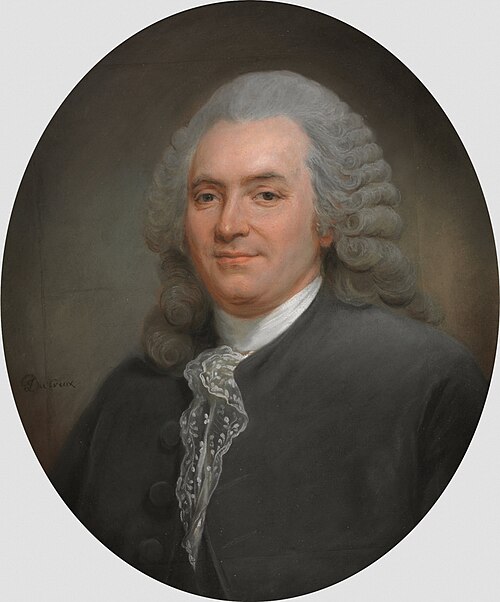
Anne-Robert-Jacques Turgot
1727–1781 · French
Diminishing returns, a theory of capital and interest a century early - and twenty months as finance minister spent trying to reform France before it broke.