Classical Economics
1776–1870Markets coordinate themselves - wealth comes from work, trade, and letting prices do their job.
The big idea
The classical economists made a claim that still sounds slightly magical: nobody is in charge of feeding London, yet London gets fed. Millions of people pursuing their own interests, coordinated only by prices, produce order that no planner designed. Wealth isn't gold in a vault - it's the yearly flow of goods a nation produces, and it grows through specialization, investment, and trade.
When and why it rose
Classical economics runs from Adam Smith's Wealth of Nations in 1776 through roughly the 1860s, and it grew up alongside two revolutions. The Industrial Revolution was transforming Britain - factories, canals, and a pin factory that could out-produce a village of blacksmiths. And the old mercantilist order of tariffs, monopolies, and royal privileges was visibly failing the people living through it.
Smith supplied the founding text; a remarkable cast built on it. David Ricardo showed with comparative advantage that trade benefits both countries even when one is better at making everything. Thomas Malthus worried population growth would swallow every gain in living standards. John Stuart Mill polished the whole system into the era's standard textbook. The school's great political cause was free trade, and it won: the repeal of Britain's Corn Laws in 1846 was classical economics translated into law.
What it got right
The core insights have never been overturned. The division of labor really is the engine of productivity - Smith's pin factory scales up to today's global supply chains, where your phone crosses a dozen borders before it reaches your pocket. Prices really do coordinate strangers: the invisible hand is a poetic name for something economists still model in earnest. Comparative advantage remains, as Paul Samuelson quipped, one of the few results in social science that is both true and not obvious. And the classicals were no naive cheerleaders - Smith distrusted merchants ("people of the same trade seldom meet together" without the conversation turning to conspiracy against the public) and favored public schools, roads, and courts.
Where it fell short
The classicals leaned on the labor theory of value - the idea that a good's value comes from the work put into it - which couldn't explain why water is cheap and diamonds dear. The marginal revolution of the 1870s replaced it, though not before Karl Marx turned the classicals' own theory into a weapon against them. Malthus's population trap was defeated by fertilizer, contraception, and technology he never imagined. Say's Law - the claim that production creates its own demand, so economy-wide gluts can't persist - looked reasonable until the Great Depression; John Maynard Keynes built his entire theory on its failure. And critics from Marx onward charged that the school was serene about wretched factory conditions; how fair that is to Smith and Mill, both genuine reformers, remains contested.
Its fingerprints today
Classical economics is the operating system nearly everything since has run on - later schools are patches, forks, or rebellions. The WTO and every free-trade agreement trace to Ricardo. "Let the market decide," GDP-style thinking about national wealth, and the presumption that competition beats monopoly are all classical reflexes. When your barista, your builder, and your phone's supply chain coordinate without a coordinator, you're watching Smith's insight run in production, two and a half centuries on.
Key figures
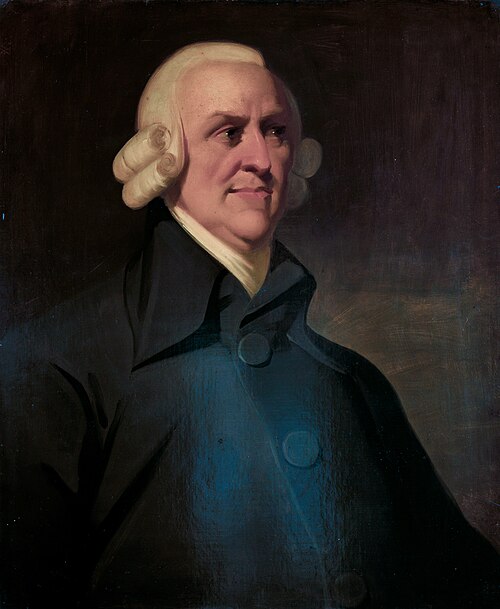
Adam Smith★
1723–1790 · Scottish
The invisible hand - self-interested trade, steered by prices, can organize a society better than any planner.
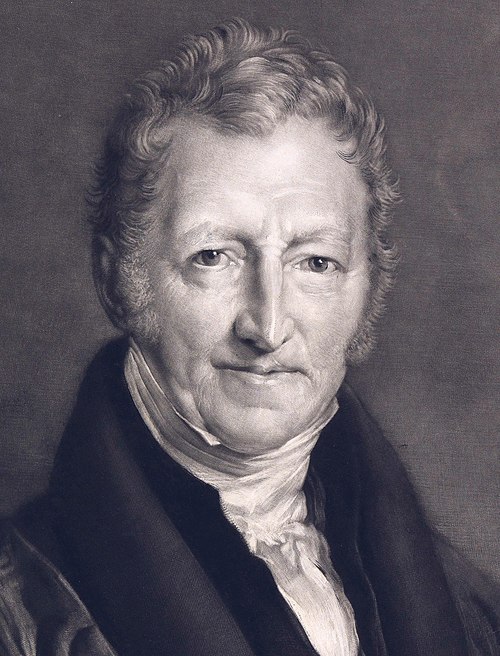
Thomas Malthus
1766–1834 · English
Population grows faster than food - so prosperity keeps getting eaten by extra mouths. Until, suddenly, it didn't.
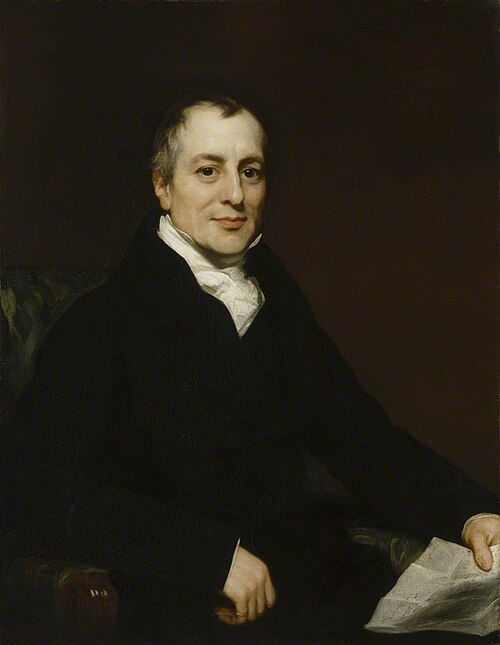
David Ricardo
1772–1823 · British
Comparative advantage - both countries gain from trade even when one of them is better at making everything.
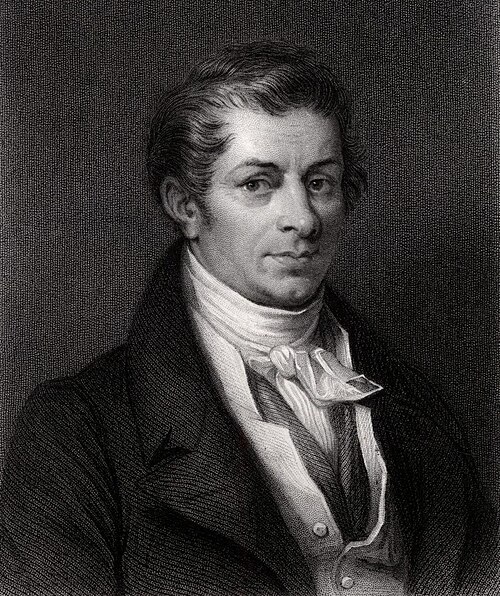
Jean-Baptiste Say
1767–1832 · French
Say's Law - you buy things with things: producing something people want is what gives you the power to demand.
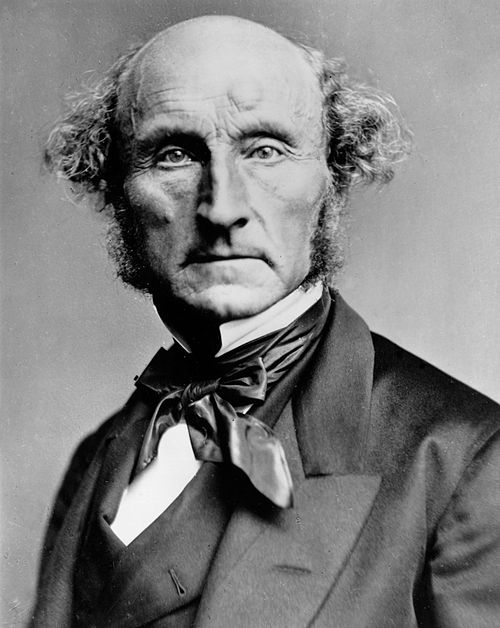
John Stuart Mill
1806–1873 · British
The classical synthesis - and the claim that production follows natural laws, but how we share the proceeds is society's choice.
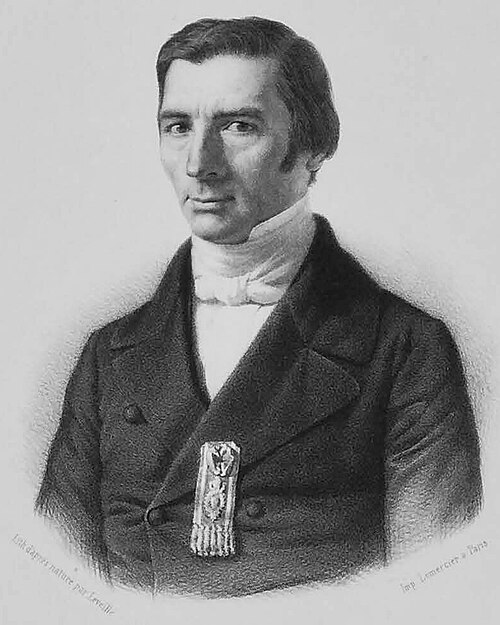
Frédéric Bastiat
1801–1850 · French
The broken window - judging every policy by what is seen AND what is not seen, and doing it with the best jokes in economics.