The Austrian School
1871–todayValue is subjective, knowledge is dispersed, and prices are how society thinks.
The big idea
The Austrians' core claim is that an economy's most important resource is knowledge - and it's scattered in millions of heads. The farmer knows her soil, the mechanic knows his customers, you know what you'd trade for a better coffee. No statistician can collect all of it, because much of it is local, fleeting, and hard to put into words. Market prices are the workaround: a price signal compresses everything everyone knows into one number that tells strangers how to act. Value isn't baked into things by labor or cost - it's subjective, in the eye of the buyer.
When and why it rose
The school was born in Vienna in 1871, when Carl Menger helped topple the labor theory of value with marginal thinking. But its defining fight came in the twentieth century, when socialism went from pamphlet to superpower. In 1920, Ludwig von Mises posed the calculation problem: without market prices for machines, steel, and land, a planner literally cannot calculate whether a project creates value or destroys it - the numbers needed for the arithmetic don't exist.
Friedrich Hayek deepened the point into the knowledge problem: even a planner with perfect computers lacks the dispersed, on-the-ground knowledge that prices harvest automatically. When frost hits the coffee crop, nobody needs to announce it - the price rises, and millions of people economize without knowing why. Hayek also sparred with John Maynard Keynes over the business cycle, arguing that cheap credit causes booms built on bad investments, which busts then painfully liquidate.
What it got right
The calculation argument was the school's great vindication. Planned economies behaved exactly as Mises predicted: chronic shortages next to warehouses of unwanted goods, because no one could tell what anything was worth. Hayek's 1945 essay "The Use of Knowledge in Society" is now mainstream canon - economists of every stripe teach prices-as-information. The Austrians also kept alive, through decades of unfashionability, ideas the profession later re-embraced: entrepreneurship as discovery, the limits of aggregate statistics, and a healthy suspicion of central planning that the twentieth century largely ratified.
Where it fell short
Austrian business cycle theory has fared worse. Milton Friedman examined the record and found the data flatly contradicted its core prediction (bigger booms don't produce bigger busts), and the "liquidationist" advice to let the Depression run its course - associated with Hayek's camp in the 1930s - is widely judged disastrous, though Austrians contest both points. The school's later refusal of mathematics and statistical testing, hardened by Mises into a method that reasons from axioms rather than evidence, pushed it to the profession's margins; critics call that unfalsifiable, defenders call it rigor about what economics can honestly know. Fair to note: Hayek himself was less doctrinaire than his heirs, and won the Nobel in 1974.
Its fingerprints today
Every economist who says "prices are information" is quoting Hayek, knowingly or not. The collapse of Soviet planning turned a Viennese seminar argument into a chapter of world history. Austrian ideas power think tanks, a stubborn wing of libertarian politics, and much of crypto culture - Bitcoin's fixed money supply is a Misesian mistrust of central banks written into software. And our price-signals interactive on this site? Pure Mises and Hayek. Try being the planner.
Key figures
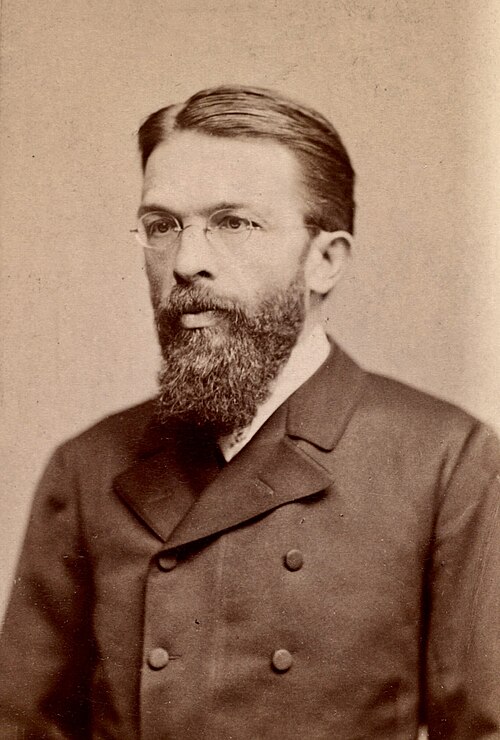
Carl Menger
1840–1921 · Austrian
Subjective value - things are valuable because people want them, not because of the labor in them - and the Austrian school built on it.
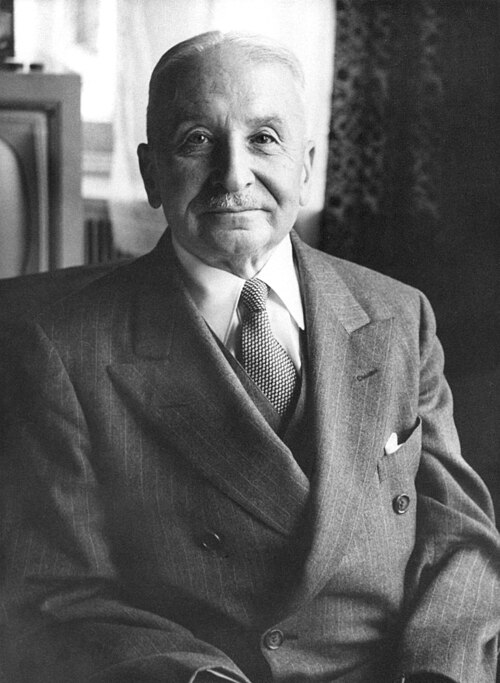
Ludwig von Mises★
1881–1973 · Austrian-American
The economic calculation problem - why central planners can't do the math without market prices
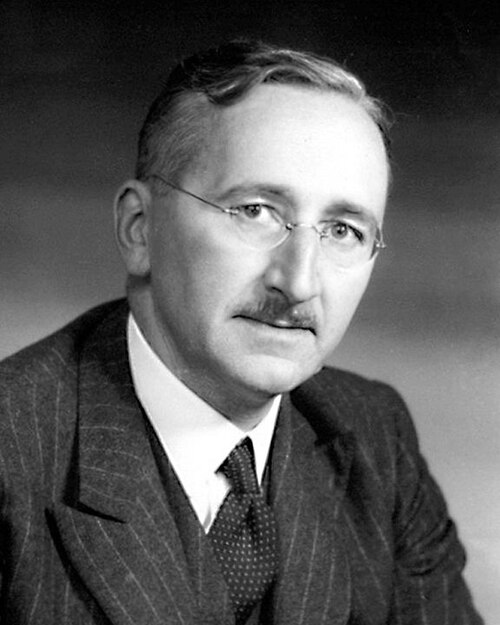
Friedrich Hayek★
1899–1992 · Austrian-British
The knowledge problem - prices carry information that no central planner can gather
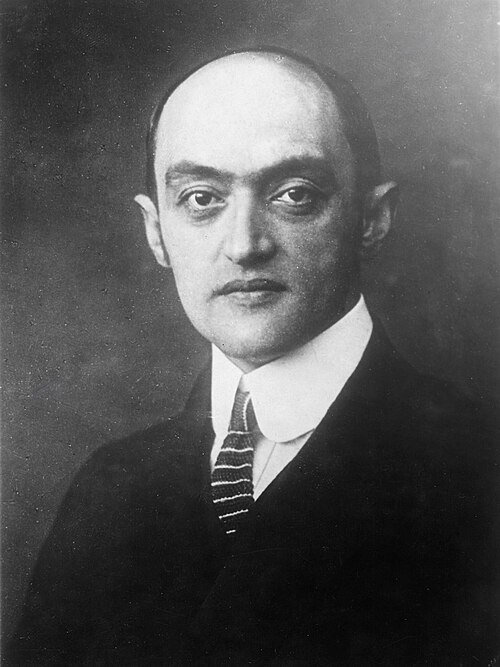
Joseph Schumpeter
1883–1950 · Austrian-American
Creative destruction - capitalism grows by ripping out the old to build the new.