Neoclassical Economics
1870–todayValue lives at the margin - and with a little math, choice itself becomes a science.
The big idea
Why is water, which keeps you alive, nearly free - while diamonds, which do nothing, cost a fortune? The classical economists never cracked it. The neoclassicals did: value isn't set by usefulness in general or by labor, but by the value of one more unit, right now. You already have plenty of water, so the next glass is worth little; the next diamond is rare, so it's worth a lot. From this marginal insight, they rebuilt economics as a science of choice - people weighing costs and benefits at the edges - expressible in curves and equations.
When and why it rose
The "marginal revolution" struck in the early 1870s in three places at once: William Stanley Jevons in England, Carl Menger in Vienna, and Léon Walras in Lausanne, each independently landing on marginal utility. Classical economics had run into puzzles its labor theory of value couldn't solve - the diamond-water paradox above, and, awkwardly, Karl Marx wielding that same theory as a weapon. The marginal approach dissolved the puzzles and, not incidentally, the weapon.
Alfred Marshall then domesticated the revolution. His Principles of Economics (1890) gave the world the diagram everyone now doodles: supply and demand crossing like scissor blades to set price at equilibrium. He added elasticity, consumer surplus, and the short run versus the long run - the toolkit, more or less, of every introductory course since.
What it got right
The marginal toolkit simply works. It explains why the diamond costs more than the water, why airlines sell the last seats cheap, why you stop at the second slice of cake. Marshall's scissors organize a staggering range of real-world questions - our supply-and-demand interactive is his machine with a slider attached. The mathematical turn made economics precise enough to be wrong in checkable ways, which is what turned it into a modern science. And the framework proved endlessly extensible: externalities, taxation, trade, and competition policy all run on neoclassical rails. When your government weighs a carbon tax, the analysis is Marshall's grandchild.
Where it fell short
The tidy model needed tidy assumptions: rational agents, full information, markets that clear. Each became a famous target. Thorstein Veblen (who coined "neoclassical" as a jab) pointed out that people buy things to show off, not just to optimize. John Maynard Keynes argued that economies can sit in unemployment for years, waiting for an equilibrium that never comes - the Great Depression made his case brutally well. Later, behavioral economists led by Daniel Kahneman showed experimentally that real humans deviate from the rational-agent model in systematic ways. Critics also charge that elegant math crowded out messy realities like power, institutions, and history; defenders reply that the framework absorbed each critique and kept going - which is either its great strength or its way of never being wrong (contested).
Its fingerprints today
Neoclassical economics isn't one school among many anymore - it's the grammar of the mainstream. Econ 101, cost-benefit analysis in every government agency, antitrust arguments, congestion pricing, carbon taxes, and the models inside central banks all speak Marshall. Even the rebels define themselves against it: Keynesians, monetarists, and behavioralists are all, in a sense, arguing about which neoclassical assumption to relax. The scissors won.
Key figures
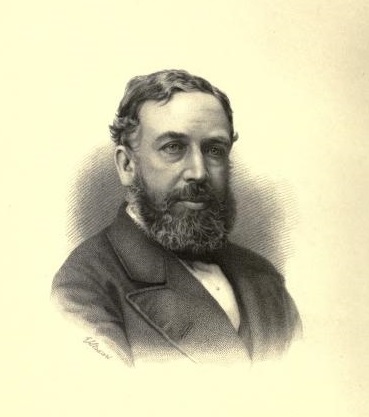
William Stanley Jevons
1835–1882 · British
Marginal utility - value lives in the last unit consumed, not the first - worked out in mathematics.
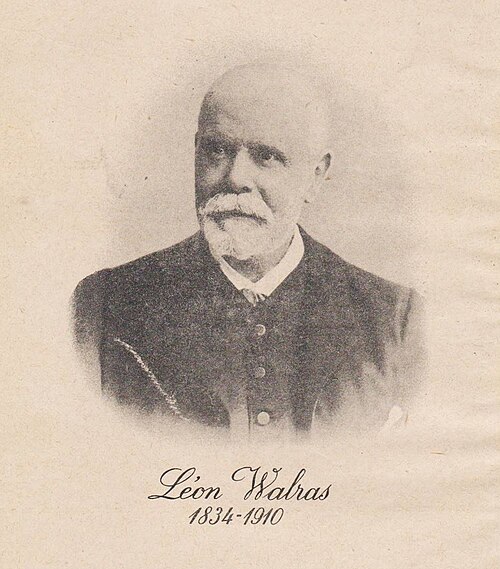
Léon Walras
1834–1910 · French
General equilibrium - every price in an economy depends on every other price, and he wrote the equations to prove it.
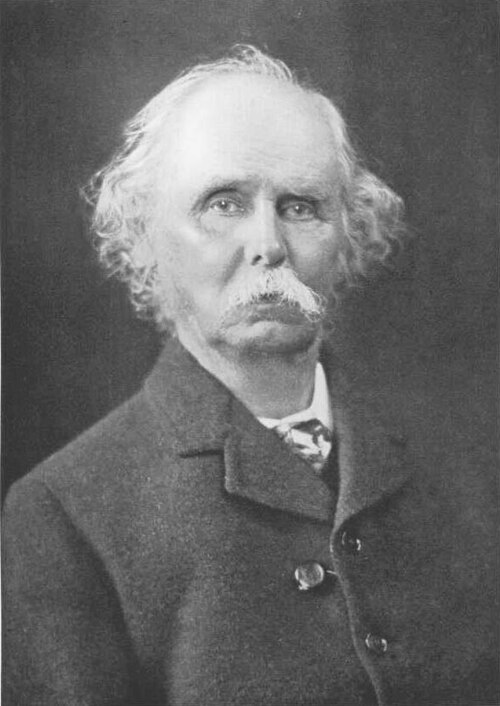
Alfred Marshall
1842–1924 · British
Supply and demand as two blades of a pair of scissors - plus the everyday toolkit of Econ 101: elasticity, consumer surplus, the short run and the long.
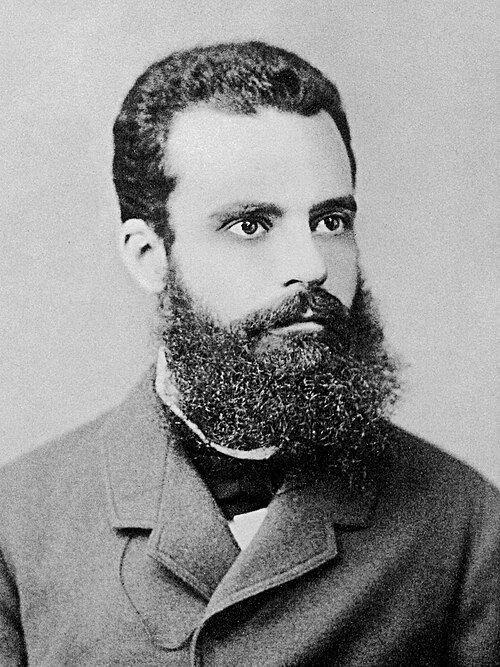
Vilfredo Pareto
1848–1923 · Italian
Pareto efficiency - an arrangement you can't improve for anyone without hurting someone else - and the lopsided 80/20 shape of wealth.
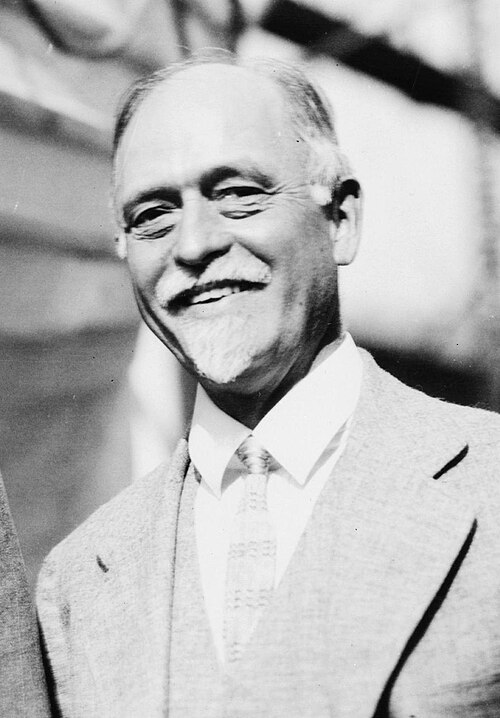
Irving Fisher
1867–1947 · American
Made money mathematical - MV = PT, real vs. nominal interest - and explained how debt plus deflation becomes depression.
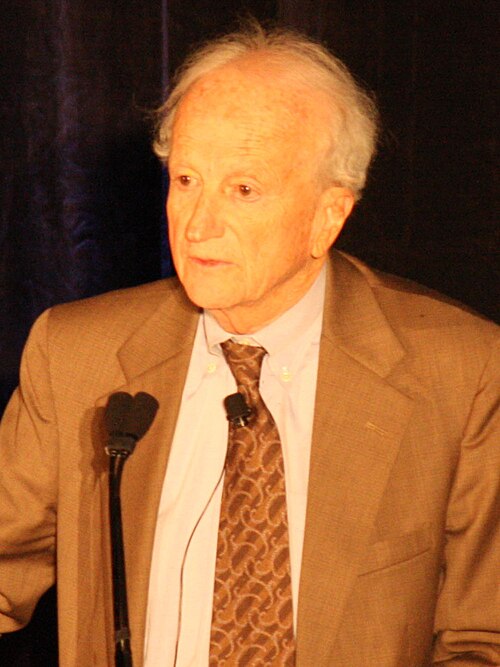
Gary Becker
1930–2014 · American
The economics of everyday life - crime, marriage, education, and prejudice, all run through Chicago price theory.